Queer Places:
Mottisfont Abbey, Mottisfont Ln, Mottisfont, Romsey SO51 0LP, United Kingdom
St Andrew Churchyard, 6 Church Ln, Mottisfont, Romsey SO51 0LL, United Kingdom
 Georgina Potter Meinertzhagen (June 22, 1850 – October 29, 1914) was a Victorian upper-middle-class woman, known as the fourth of the nine influential Potter sisters
(Lawrencina,
Catherine, Mary,
Blanche, Theresa,
Margaret, Beatrice,
Rosalind).
Georgina Potter Meinertzhagen (June 22, 1850 – October 29, 1914) was a Victorian upper-middle-class woman, known as the fourth of the nine influential Potter sisters
(Lawrencina,
Catherine, Mary,
Blanche, Theresa,
Margaret, Beatrice,
Rosalind).
She was born in Gloucestershire, England, to the industrialist and corporate capitalist Richard Potter and Lawrencina Heyworth.
In September 1873, she married Daniel Meinertzhagen VI, a partner in a prominent merchant banking firm.
Among her children was Richard Meinertzhagen (1878–1967), who became a renowned British intelligence officer, soldier, and ornithologist.
Her younger sister was the famous sociologist and Fabian socialist Beatrice Webb (née Potter).
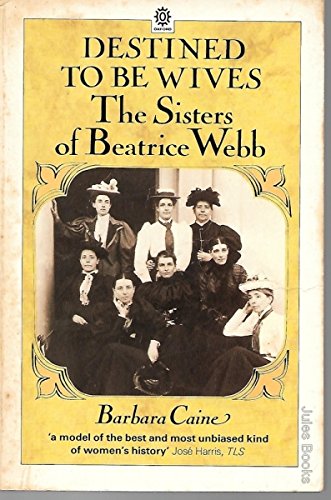
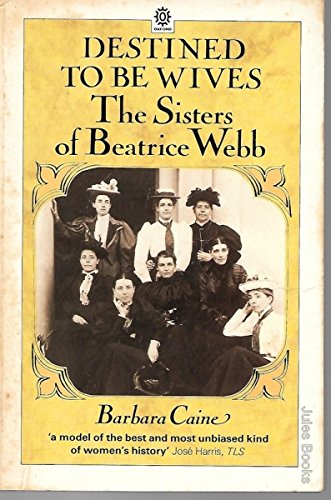
The nine Potter sisters were prominently analyzed in late 20th-century gender and social history, notably in Barbara Caine’s biographical study Destined to be Wives: The
Sisters of Beatrice Webb.
Although Georgina married into a traditional merchant banking family and lived a outwardly respectable life, the Potter sisters collectively challenged traditional
Victorian gender boundaries. Raised with unusual intellectual freedom by their father, they frequently questioned the legal, economic, and domestic subordination of women
during the 19th century.
Within 19th-century gender history, the Potter sisters—including Georgina—are studied for their reliance on deep, emotionally intense female "sisterhood" bonds and close
same-sex friendships. These relationships provided emotional security, intimacy, and solidarity outside the restrictive confines of Victorian heterosexual marriage
ideals.
Georgina Potter Meinertzhagen is closely tied to the history of Mottisfont in Hampshire. In 1888, Georgina’s husband, merchant banker Daniel Meinertzhagen VI, leased
Mottisfont Abbey near Romsey as their main family seat.
Under Georgina’s management, Mottisfont Abbey served as a country home for their ten children. It became an intellectual gathering space for notable Victorian and
Edwardian figures, including evolutionary biologist Thomas Huxley, Charles Darwin's circle, and philosopher Herbert Spencer.
Her son, the soldier and ornithologist Richard Meinertzhagen, later immortalized growing up under Georgina’s care at Mottisfont Abbey in his famous childhood memoir,
Diary of a Black Sheep.
The 12th-century Church of St Andrew stands just northwest of Mottisfont Abbey within the same parish estate. During the late 19th and early 20th centuries, it served as
the local parish church for the Meinertzhagen family.
Inside St Andrew’s Church, on the south wall of the nave, rests a prominent historic memorial installed by the family during their period at Mottisfont Abbey.
Dating back to 1693, the carved stone memorial originates from the St. Michael Church in Bremen, Germany. It was erected by Daniel Meinertzhagen’s ancestral namesake (a
senator of Bremen). When the German church was rebuilt in 1898, the Senate of Bremen sent the 17th-century family crest and memorial to Daniel and Georgina's family in
England, who subsequently installed it in St Andrew’s Church, where it remains today.
References:
Other references:
- https://www.wikitree.com/wiki/Potter-9790
- https://www.openbookpublishers.com/books/10.11647/obp.0318/chapters/10.11647/obp.0318.04
- https://www.mottisfontpc.org.uk/acorn/acorns/2006/Acorn%20Nov%2006.pdf
- https://historicengland.org.uk/listing/the-list/list-entry/1172913
- https://www.british-history.ac.uk/vch/hants/vol4/pp503-510
Support this project
This website is a passion project researched, developed, and funded entirely by me. If you find the content valuable and would like to help support the ongoing research and hosting costs, any contribution is deeply appreciated.
Thank you for keeping this independent resource alive!
My books on Amazon: Elisa Rolle's books
BACK TO HOME PAGE